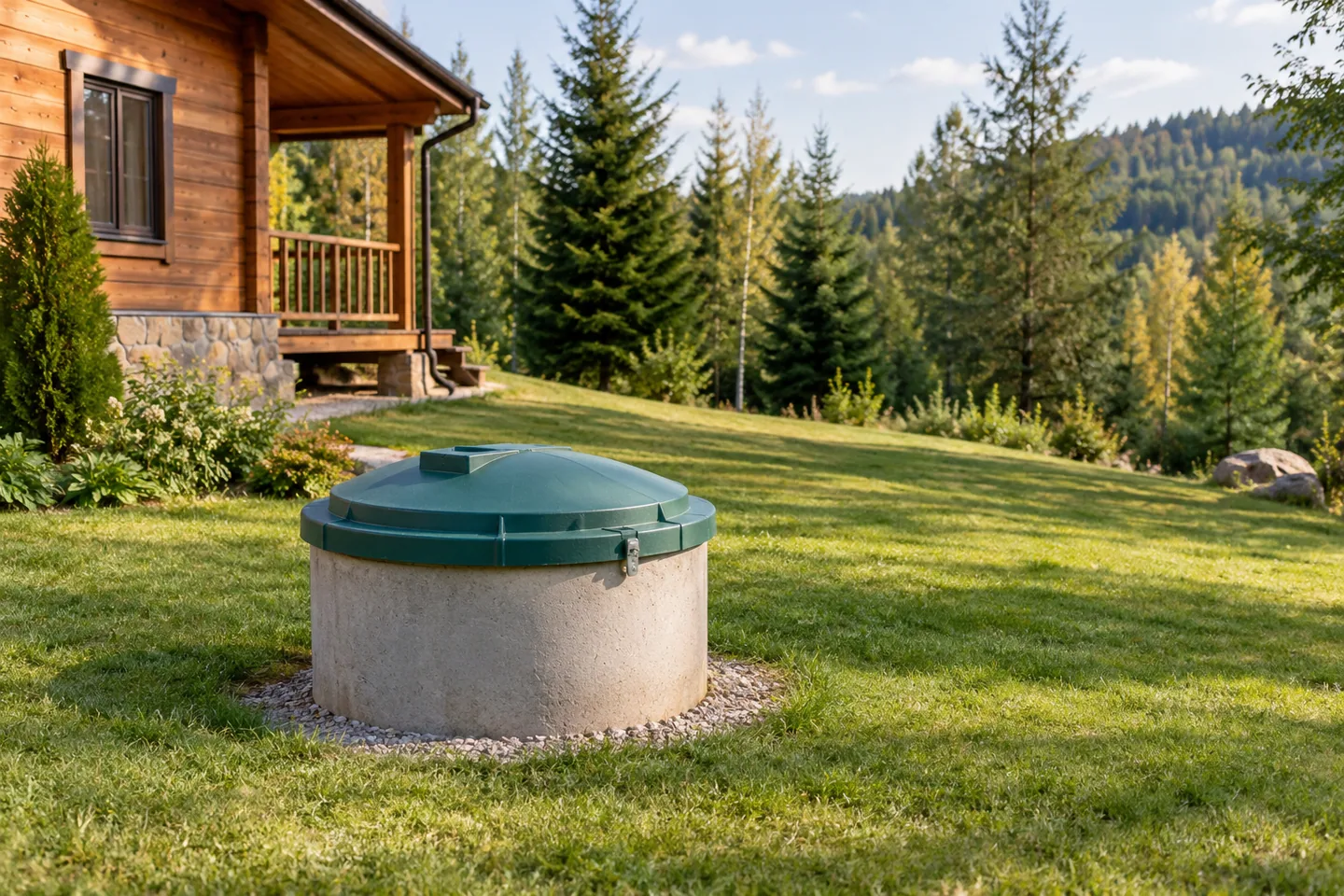
AI-generated cabin concept, used for illustration.
In this guide
Compare cabin water options as complete operating systems. A well, delivered water or collected rainwater raises different questions about availability, quality, storage and maintenance.
Define the intended uses
Separate drinking and food preparation from other proposed uses. Ask the relevant local authority what sources and arrangements are permitted, and what testing, treatment and plumbing controls are required.
Do not infer that water is safe to drink from its appearance or from a neighbor's experience. For US private wells, US EPA: protect your home's water provides a starting point for testing and protection responsibilities.
Put the recurring work into the comparison
For each feasible option, record the supply source, interruption risks, storage, maintenance tasks and the person responsible. Add current quotes only after the scope is clear.
| Planning question | Why it belongs in the comparison |
|---|---|
| How does water reach the cabin? | Determines access and equipment needs |
| What happens when supply stops? | Defines storage and contingency planning |
| Who verifies water quality? | Establishes an ongoing responsibility |
| What happens while the cabin is empty? | Shapes shutdown and return procedures |
An illustrative comparison might show a low initial equipment cost paired with frequent delivery work. Another option may require more investigation before its reliability can be established.
Choose only after the local feasibility and operating responsibilities are understood. “Off-grid” describes the relationship to services; it does not guarantee that every independent water source is suitable for every use.