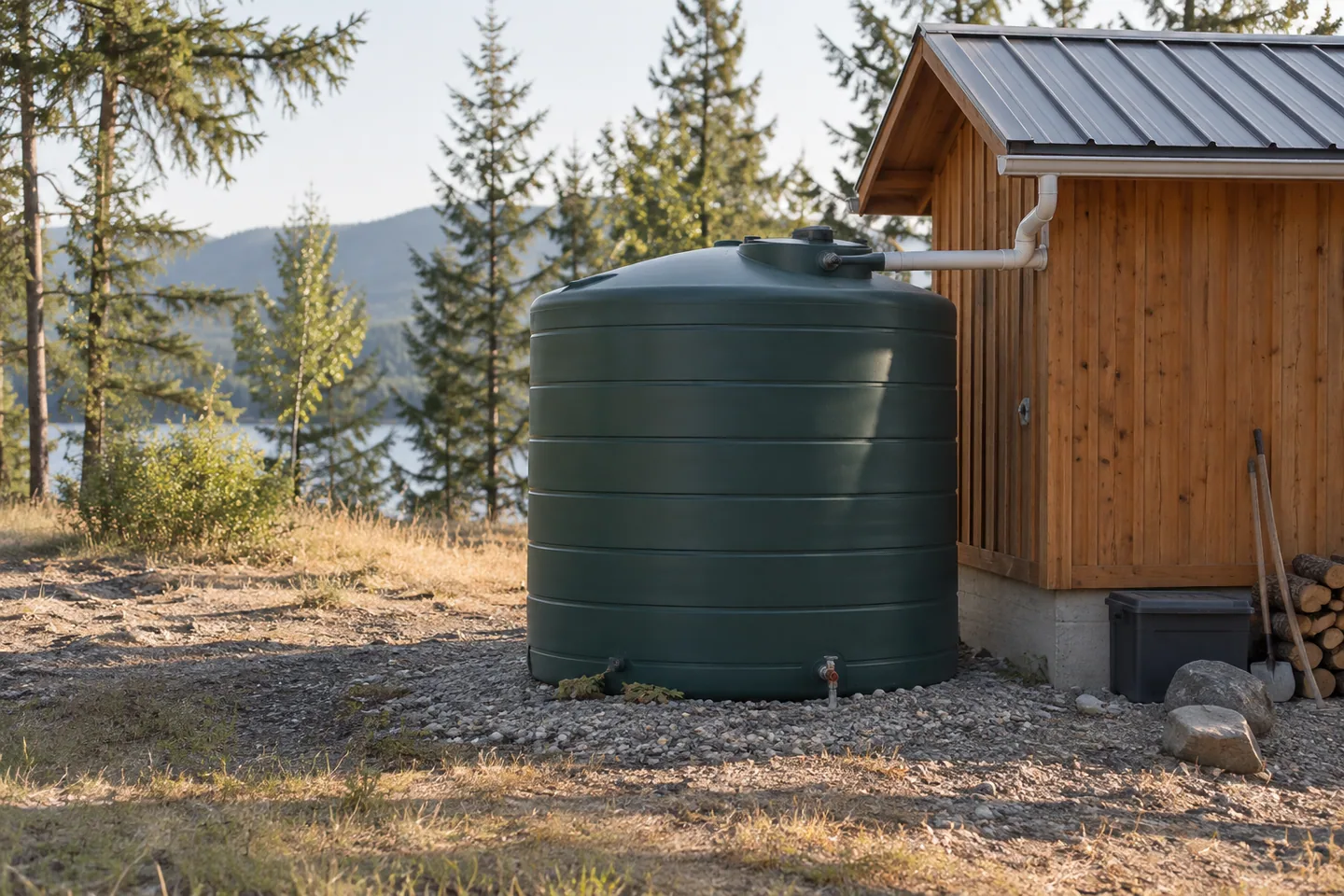
AI-generated cabin concept, used for illustration.
In this guide
Estimate cabin water storage from expected use and the time between dependable replenishment. Roof collection potential and usable storage are different parts of that calculation.
Build a transparent scenario
Suppose an illustrative household plans for 120 liters per day across its chosen uses and wants to examine a five-day supply gap. The simple consumption subtotal is 120 × 5 = 600 liters.
Those invented inputs are not a recommended allowance or a tank specification. Real planning must consider reserve needs, usable volume, supply reliability, losses and local requirements. Use observed consumption where you can.
Your Home: rainwater explains the wider collection and storage system in an Australian context. Apply the relevant local water-use and installation rules to your own cabin.
Compare the quiet and busy visit
List ordinary occupancy and the busiest realistic stay separately. Add uses that are easy to overlook, such as cleaning between visits. Identify which uses can be reduced during a supply shortage and which cannot.
Ask the installer how the tank, supply, treatment where required and overflow will operate together. Include delivery access and maintenance access before choosing a location.
A large tank is not automatically a complete solution if the replenishment route is unreliable. Keep the demand estimate beside the supply assumptions so the final design addresses both sides of the problem, instead of choosing a size because it happens to fit the available corner.