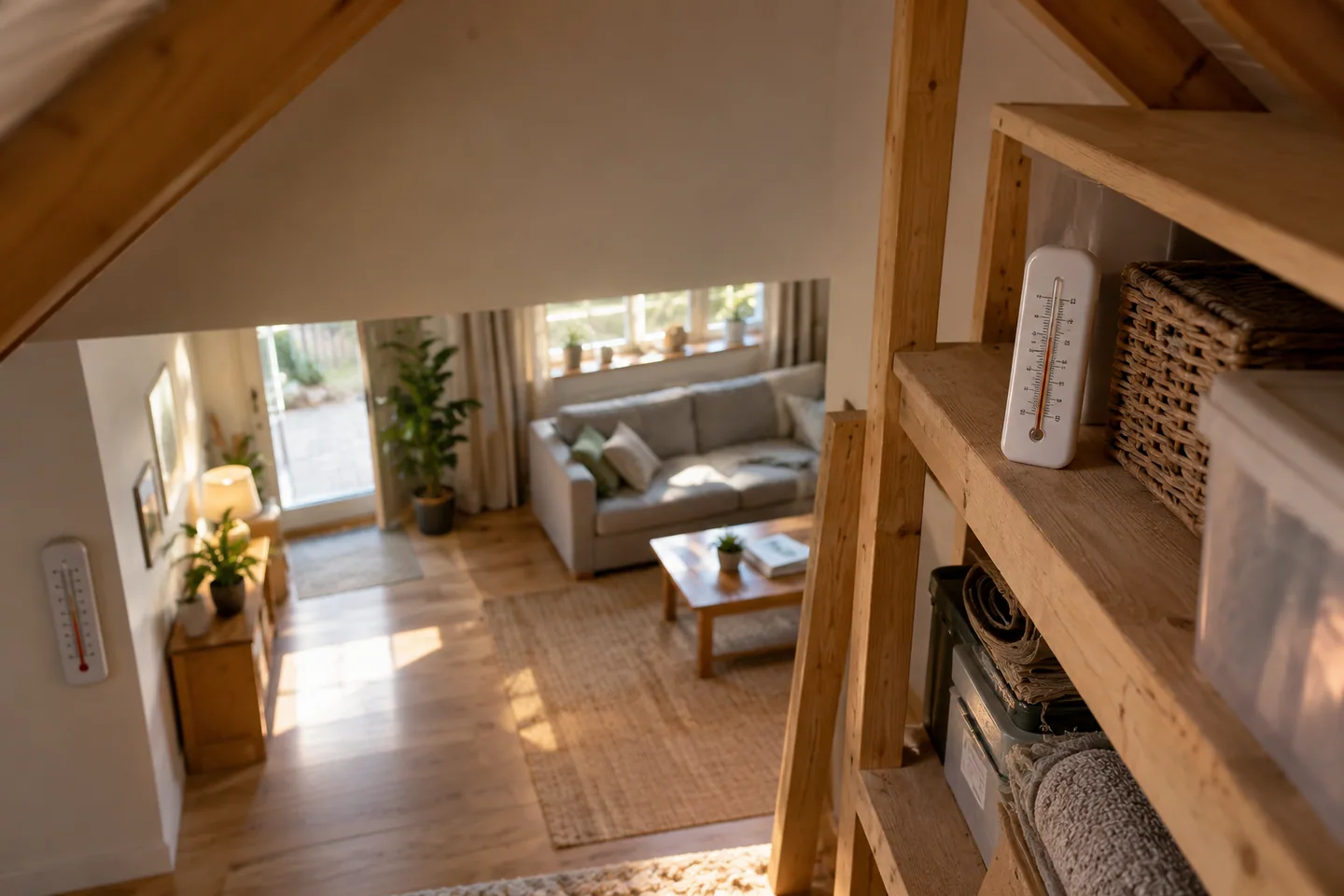
AI-generated cabin concept, used for illustration.
In this guide
If the loft feels much hotter than downstairs, record the pattern before making a large change. A simple log helps distinguish a constant problem from one tied to sun, occupancy or system operation.
Compare the same moments
Use suitable devices according to their instructions and record loft and downstairs readings at the same times. Keep their positions representative of occupied space and note any direct sun or nearby equipment that may influence the reading.
Add outdoor conditions, window positions, shading and heating or cooling settings. Include a short comfort note; the temperature number alone does not capture every part of how the room feels.
Your Home: heating and cooling gives background on considering the building and system together. The log is evidence for an assessment, not a diagnosis by itself.
Change one ordinary setting at a time
Where safe and consistent with equipment instructions, compare the normal room arrangement with an ordinary alternative such as using an existing shade. Do not alter wiring, vents or roof construction as an experiment.
An illustrative finding might be that the loft becomes uncomfortable mainly during late-afternoon sun. Another might show a persistent difference even without that exposure. Those patterns lead to different design questions.
Give the log and cabin drawings to the relevant professional. Ask how the proposed improvement addresses the observed pattern and how you can check the result afterward. That makes the next decision more grounded than choosing the most frequently recommended fan online.