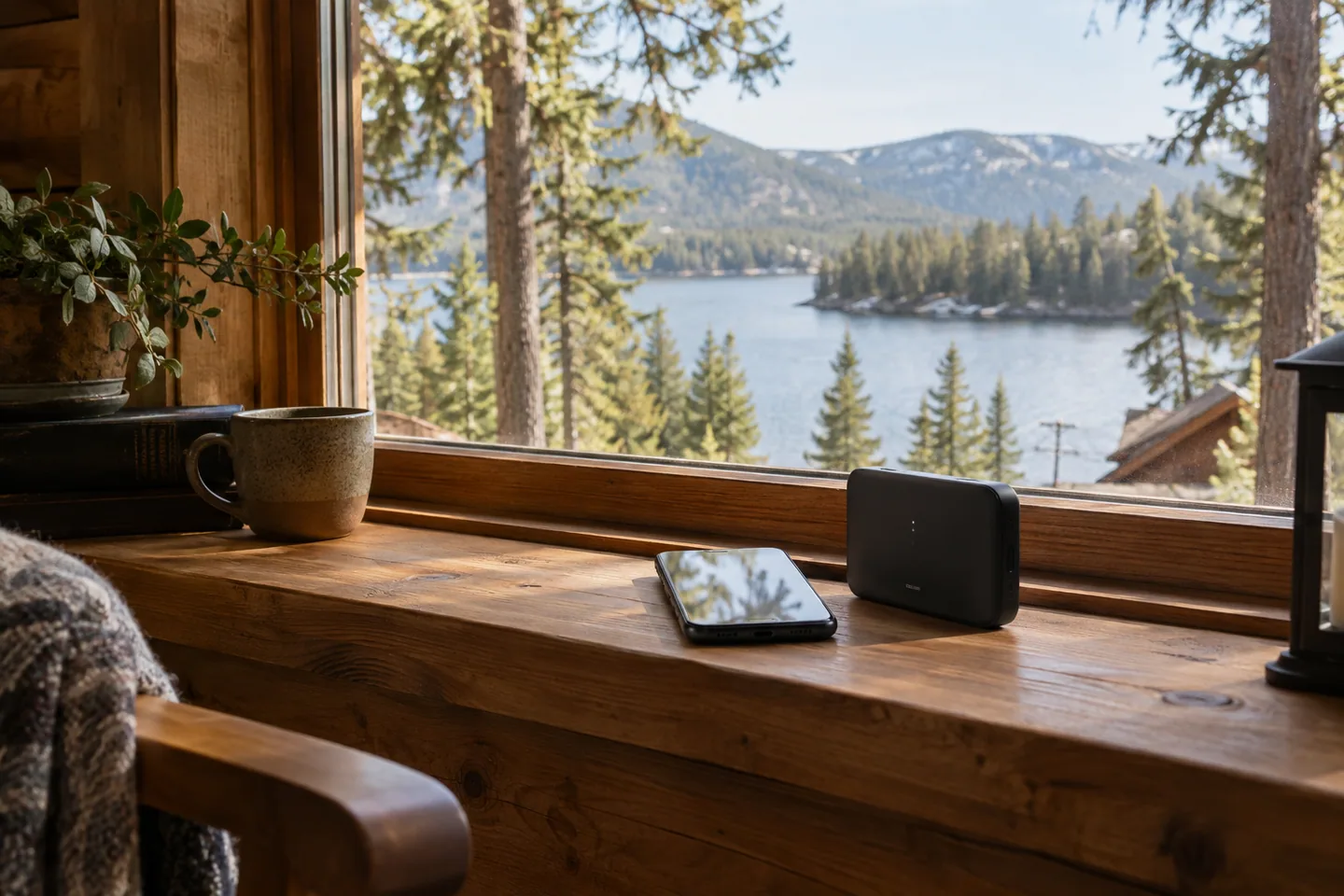
AI-generated cabin concept, used for illustration.
In this guide
Choose cabin internet by testing the work you need it to do at the actual property. A coverage map or a good signal at the road is not enough to establish reliable service inside the cabin.
Test a normal day, not one speed reading
List the activities that matter: video calls, document uploads, streaming, guest access or remote equipment alerts. Then test the available connection from likely working positions, noting the device, time and conditions.
For a remote-work cabin, run a real call and upload a representative file. A download result alone does not tell you how those tasks feel. Save several observations rather than treating the best result as typical.
Check current service terms directly with each provider. Availability, equipment, data policies and pricing change, and there is no universal best provider for cabin land.
Include installation and outages
Ask where equipment must sit, how it receives power, how cables enter the building and who handles installation. If you are comparing satellite service, obtain the provider's current site-assessment requirements before assuming the roof location will work.
Decide what should happen when the connection fails. An occasional movie can wait; a scheduled work call may require an alternative place to work. Remote monitoring also needs a plan for loss of power, not just loss of internet.
Use the broader services questions in Your Home: choosing and using a site when reviewing land. Keep communications as its own item: a cabin can have electrical service and still be unsuitable for the way you intend to work there.