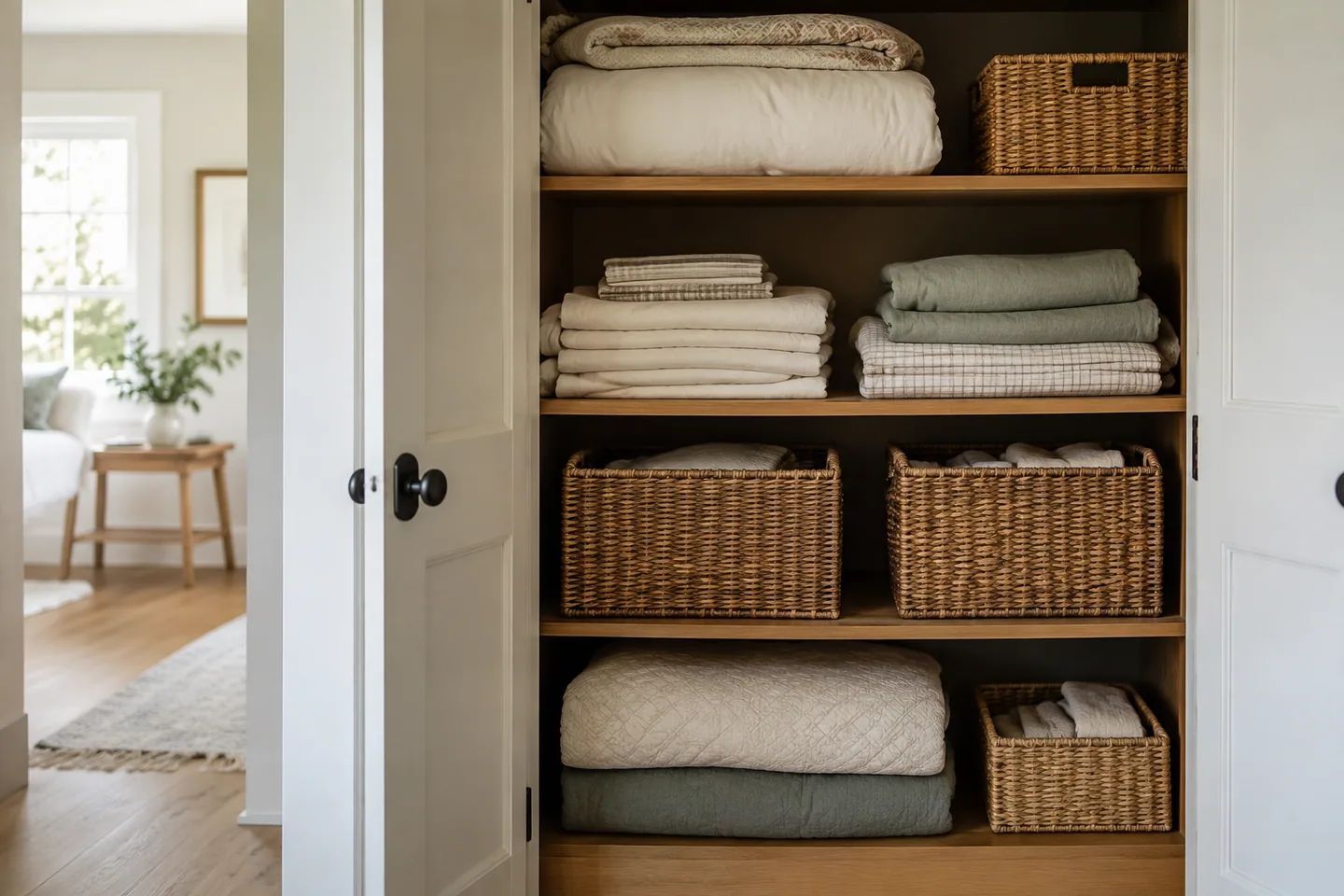
AI-generated cabin concept, used for illustration.
In this guide
Give clean linen, used linen and occasional spares different locations. A small cabin becomes harder to reset when all three end up in the same unlabelled cupboard.
Build the inventory from the beds
List the actual bed sizes and the towels needed for normal occupancy. Group complete bedding sets so a change does not require searching several shelves. Label the storage in plain language that another user can understand.
Reserve the most reachable space for routine changes. Put infrequently used spare items in less convenient storage only if they remain suitable for that environment. Keep textiles away from damp or unassessed storage conditions.
Follow one departure through the room
Where does used bedding go immediately after removal? Where does the clean set wait while the bed is made? Who takes laundry away or runs it onsite?
An illustrative system uses one labelled location per bed size and a separate container for items awaiting laundering. The point is not the container style; it is preventing a partly used set from returning to clean storage by mistake.
Avoid accumulating spares without reviewing the available space. More stock can make a small cupboard harder to use while hiding what is missing.
After a few visits, note which labels or locations cause confusion and simplify them. A good linen system allows someone to reset the cabin without needing a tour of every low cupboard beneath the A-frame slopes.