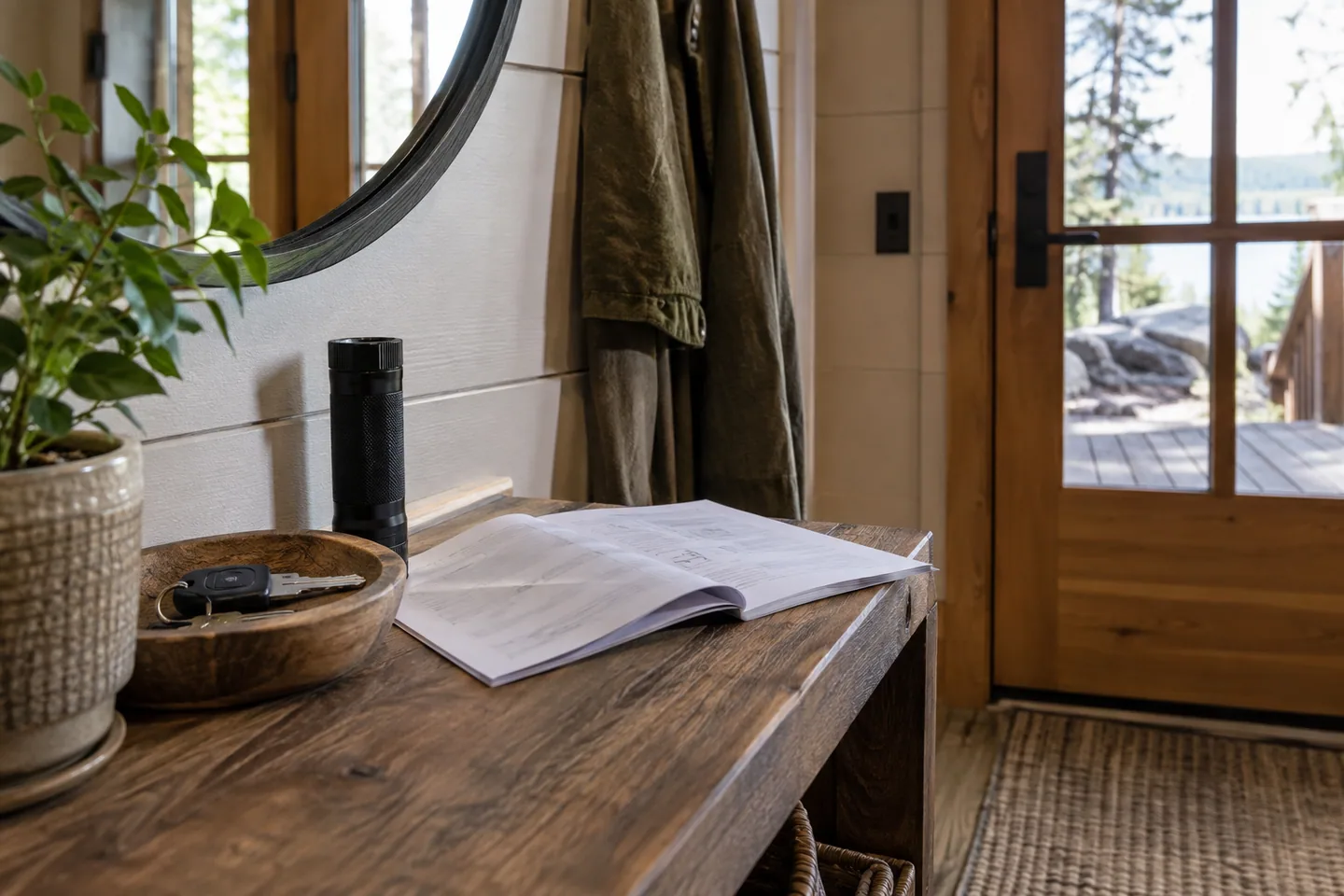
AI-generated cabin concept, used for illustration.
In this guide
A cabin house manual should help someone complete an ordinary stay without guessing. Put the most frequently needed actions first and keep technical manuals available separately.
Organize it around the visit
Use four sections: arrival, daily use, departure and who to contact. Name controls by their actual labels and locations. Include photographs where a picture prevents confusion.
For equipment, summarize only the owner-level actions confirmed by the installer or manufacturer. Do not invent a simplified procedure for unfamiliar heating, water or electrical systems. Link or point to the full instructions.
The US Fire Administration: smoke alarms provides US smoke-alarm guidance; use the actual devices' instructions and local fire guidance when documenting the cabin's alarms and response arrangements.
Test it with a fresh reader
Ask an authorized user to follow the routine while you observe. Note where they stop, search or misunderstand a label. Revise those parts rather than adding more general prose.
An illustrative weak instruction is “turn the water on.” A useful version identifies the approved control and refers to the system's confirmed reopening procedure. Only include the steps that are correct for your installation.
Keep emergency contacts, the property address and relevant access information accurate. Store sensitive access codes separately with appropriate access controls.
Date the manual and update it whenever equipment or the departure routine changes. A short accurate document is more useful than a long binder whose first page describes a heater that was replaced years ago.