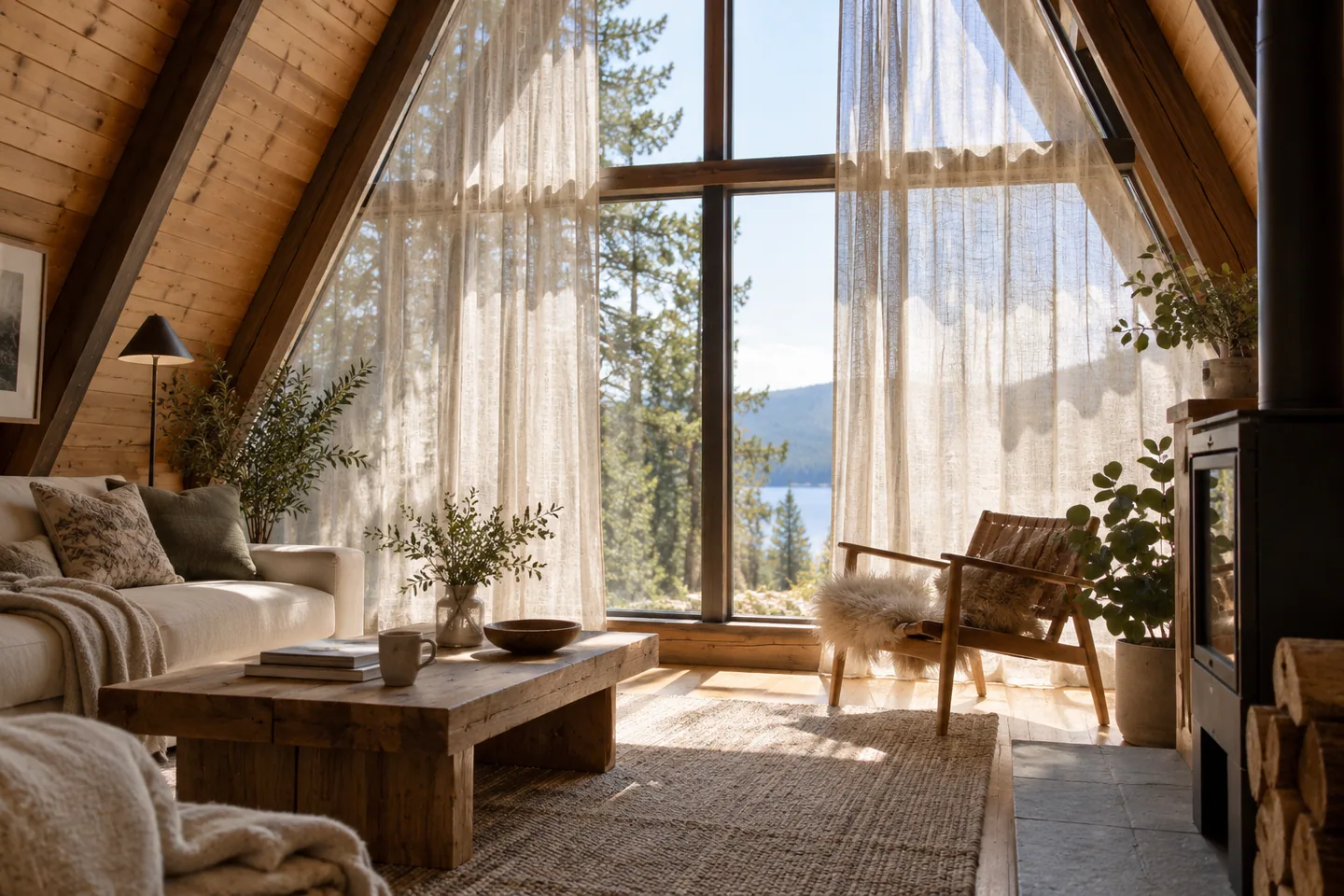
AI-generated cabin concept, used for illustration.
In this guide
Plan glazing around the view you want and the view other people will have into the room. Then choose shading and privacy measures for each part of the window, rather than treating the entire triangular front as one problem.
Look from outside as well as inside
From the proposed seating or bed position, mark the sightline to nearby paths, roads and neighbouring properties. Repeat the exercise with lights on indoors. Privacy needs can change when a room is lit and the surroundings are dark.
If the cabin is not built yet, use the site plan and photographs taken from the intended positions. A beautiful distant mountain view does not reveal the closer line of sight from an access track. Put both on the same drawing.
Separate three needs
- Privacy: whether someone can see an activity you want screened.
- Glare control: whether bright light makes a screen, table or seating position uncomfortable.
- Temperature management: how the glazing and shading contribute to the room's comfort.
One product may address more than one need, but do not assume it resolves all three. Ask the window and shading suppliers to explain what their proposal does in the orientation and conditions of your site.
Cover only what needs covering
You may want screening at the lower portion of a glazed wall while keeping a higher view open. A curtain, blind or change in room arrangement can be tested against that need. Check where the covering stacks when open and whether it interferes with a door, heater or main route.
Unusual window shapes can make standard products harder to fit. Obtain measured proposals before treating a covering as an easy final purchase. Include its installation, operating controls and future replacement in the budget.
Plan how you will reach it
A high blind still needs a practical way to operate and maintain it. Ask how cleaning, repairs and a failed control would be handled. The same question applies to opening sections and the glass itself.
Avoid assuming a ladder can be placed anywhere inside a furnished cabin. Discuss safe access arrangements with the people specifying and maintaining the installation.
Test the furniture before changing the façade
Moving a desk sideways or shifting the seating position can change the glare problem you need to solve. Sketch several arrangements before deciding that every pane needs the same treatment. Keep circulation and headroom in the drawing so a lighting improvement does not create another inconvenience.
For the bigger glazing decision, compare one large window wall with several smaller windows. Add your questions and supplier responses to the planning checklist so the final choice includes operation and maintenance as well as appearance.