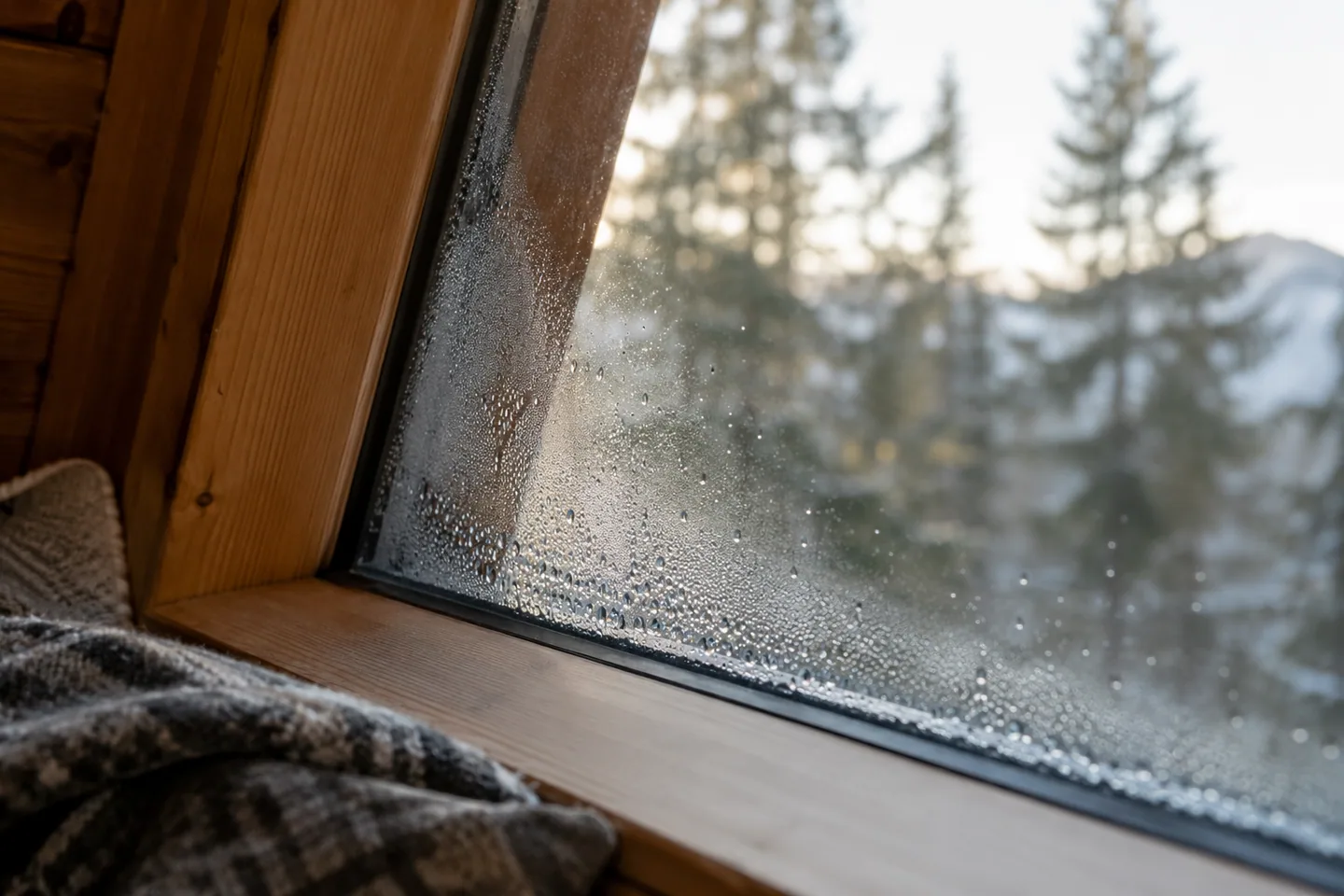
AI-generated cabin concept, used for illustration.
In this guide
Condensation appears when moisture in the air meets a surface cold enough for water to collect. Large cabin windows make it easy to notice, but the cause needs checking: indoor humidity, surface temperature and ventilation all matter.
Find out which surface is wet
Look carefully before cleaning it. Is the moisture on the room side, outdoors, or apparently between panes? Does it cover the glass evenly, collect at the bottom or appear in one corner? Take a photograph and record the weather and time.
Water around a frame after rain is a different pattern from morning moisture across the inside of several windows. The observations will not diagnose the fault by themselves, but they help you describe it accurately to a window installer or building professional.
Record the room conditions
A simple humidity meter can help you follow changes through cooking, showers, clothes drying and periods when the cabin is unoccupied. Keep a short log rather than relying on one reading taken during an unusual moment.
The EPA's moisture guidance recommends keeping relative humidity below 60%, ideally between 30% and 50% where possible. The same guidance advises acting promptly when condensation appears. These are general moisture-management references, not a guarantee that one reading makes a particular roof or window assembly suitable.
Check everyday sources of moisture
Do bathroom and cooking extract systems operate as intended? Are wet coats and towels being dried in a small closed room? Are furniture or blinds affecting air movement near the wet area? Review the building's ventilation instructions and have faults checked.
Avoid treating permanent ventilation as an optional nuisance to close whenever the weather is cold. If it is making the cabin uncomfortable, ask the responsible professional to investigate the system and its controls rather than improvising a new operating arrangement.
Do not hide recurring damage
Dry visible water and record whether it returns. Swelling finishes, staining or a persistent musty smell deserve investigation. Repainting the spot or covering it with a cabinet can hide the evidence without resolving the moisture source.
If the moisture seems to be inside a sealed glazing unit, contact its supplier with the product details and photographs. If it is associated with rain, explain that pattern as well. Different observations lead to different checks.
Keep the repair question specific
Instead of asking “Which window should I buy?”, start with “Why is this location repeatedly wet under these conditions?” You may need work on the ventilation, an installation detail, the glazing or another moisture source.
Add the observations to your planning and maintenance notes and use the maintenance calendar to schedule follow-up checks after any work. A repair is easier to judge when you can compare it with the original pattern.